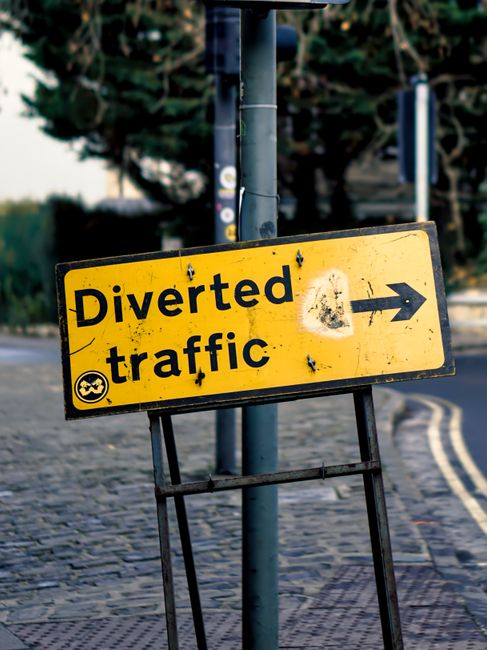
Do I Need a Road Closure for a Silvertown Move?
If you are asking, Do I need a road closure for a Silvertown move?, you are probably trying to solve a very practical problem: how to get a van, your furniture, and everyone's patience through a tight London street without causing chaos. Fair enough. In Silvertown, that question usually comes down to access, loading space, vehicle size, timing, and whether your move will briefly affect traffic or parking on the road outside.
Most home moves in Silvertown do not need a full road closure. But some moves do need extra space, extra control, or formal permission if the property layout, road width, or amount of equipment makes normal loading unrealistic. In this guide, we'll break down when a closure is actually useful, what it involves, and how to judge whether your move can be handled with permits, parking control, or a smarter moving plan instead.
For a smoother move overall, it also helps to read practical guides like this calm house move checklist and packing advice for busy moving days. They cover the bits that often make or break the day.
Table of Contents
- Why this question matters in Silvertown
- How a road closure works in practice
- Key benefits and practical advantages
- Who needs a road closure and when it makes sense
- Step-by-step guidance
- Expert tips for better results
- Common mistakes to avoid
- Tools, resources and recommendations
- Law, compliance, standards and best practice
- Options and comparison table
- Case study or real-world example
- Practical checklist
- Conclusion
- Frequently asked questions
Why Do I Need a Road Closure for a Silvertown Move? Matters
Silvertown is not the sort of place where you can assume there will be unlimited kerb space and plenty of room to swing a sofa. Streets around the Royal Docks side, the E16 network, and the narrower residential roads can make loading straightforward one minute and fiddly the next. The difference between a clean move and a stressful one is often just a few metres of road space.
A road closure matters because moving day has a habit of multiplying small problems. A van blocks the entrance. A second vehicle pulls in where you planned to stop. A bed frame needs longer carry distance than expected. Suddenly, everyone is waiting, and that lovely plan you made over tea at 9pm the night before starts to wobble. If the move involves a large team, awkward access, or repeated trips across the carriageway, a temporary closure can protect people and property.
That said, a closure is not the default answer. In many cases, what you really need is a clear loading strategy, sensible timing, a parking arrangement, or a move coordinated around local restrictions. For example, permit planning for moving vans is often more relevant than a full road shutdown.
Expert summary: If the van can load safely without stopping traffic for long, you probably do not need a road closure. If the move will block a live lane, use a large crew, or require repeated manual carries from across the road, closure planning becomes much more worth considering.
How Do I Need a Road Closure for a Silvertown Move? Works
Let's keep this plain-English. A road closure is a temporary arrangement that stops or limits traffic on a road segment for a set period. For a house move, it is usually considered when the operation cannot be completed safely or efficiently within normal parking-and-loading arrangements.
In practice, the process is usually driven by the property type and the moving method rather than by the postcode alone. A typical move might use:
- a standard van parked legally near the property;
- parking bay suspension or a loading space;
- advance notices to neighbours;
- short, controlled loading windows;
- extra staff to reduce the time the van is stationary.
A more complex move might involve temporary traffic management, cones, signage, and in some cases formal road occupation or a closure request. The exact arrangement depends on the road, the time of day, the amount of traffic, and whether access for residents, emergency services, or other vehicles must be maintained.
If your move is on a tight route, such as around narrow access roads or busy dockside streets, look at local access planning carefully. Articles like moving through narrow Silvertown streets and loading on North Woolwich Road are useful because they show how much difference the street layout makes.
One important thing: a closure does not automatically make a move easier. It can reduce conflict with traffic, yes, but it can also add admin, extra cost, and timing pressure. So the real question is not just "can I get one?" It is "will it genuinely save time, risk, or stress?"
Key Benefits and Practical Advantages
When a road closure is justified, it can make a move feel much calmer. That sounds simple, but in moving terms calm is gold. A few well-managed metres of space can remove a surprising amount of friction.
- Safer loading and unloading: Fewer passing vehicles means fewer awkward moments when someone is carrying a wardrobe and a car is waiting just behind them.
- Less damage risk: If you are not edging around parked cars, bins, scooters, and the inevitable little surprises of city streets, you lower the chance of bumps and scrapes.
- Faster turns between trips: A clear loading area can cut down on wasted steps and reduce double-handling.
- Better control of a busy move: This matters especially if you are coordinating a flat, office, or multi-stop relocation.
- More predictable timing: Predictability is underrated. If you have cleaners, landlords, or keys handover deadlines to hit, a smoother loading sequence can help a lot.
It is also worth saying that a closure can benefit neighbours if the alternative is a half-blocked road with a van nose-out at an awkward angle and everyone trying to pass one by one. That is the sort of thing people remember, and not fondly.
For heavy items, the advantage becomes even clearer. If you are moving bulky furniture, a piano, or large wardrobes, then controlled access matters. You may find it helpful to read how to handle heavy items carefully and why piano moving is best left to professionals.
Who This Is For and When It Makes Sense
Not every Silvertown move needs the same level of planning. Truth be told, some people only need a man and van, a decent parking spot, and two strong cups of tea before 8am. Others need a more structured approach.
A road closure or similar traffic management makes more sense if you are:
- moving from a property with no off-street loading space;
- on a narrow road where vehicles cannot pass safely;
- handling a very large household move with repeated van trips;
- moving expensive, fragile, or oversized items;
- coordinating multiple crews or delivery windows;
- moving during a busy time of day on a congested route;
- dealing with a building entrance that opens directly onto the carriageway.
It may also be relevant for some office removals, especially if lorries, lifts, reception access, or multiple bays are involved. A small office on a quieter street is usually manageable without such measures. But a business move with crates, IT kit, and furniture coming and going all day is a different beast.
If you are unsure where you sit on that scale, compare your move with the practical advice in our Royal Victoria Dock moving guide and the Royal Albert Dock to airport route notes. The point is not the exact route; it is understanding how local access shapes planning.
Step-by-Step Guidance
If you are trying to work out whether you need a road closure, use this sequence. It keeps the decision grounded instead of guessy, which is always better.
- Assess the road and access point. Look at width, parking, kerb access, visibility, and whether the van can stop without causing a blockage.
- Measure the practical loading distance. A move looks simple until you realise the front door is much further from the nearest legal stopping point than you thought.
- Check item size and volume. A few boxes and a mattress are one thing. A full house with white goods, wardrobes, and a piano is another.
- Think about timing. Early morning, school-run hours, delivery periods, and peak traffic all change the picture.
- Plan the route from property to van. Avoid pinched corners, shared entrances, and awkward stairwells where possible.
- Decide whether simple parking control is enough. In many cases, a well-placed van and a sensible loading plan are enough.
- Escalate only if needed. If the move would block the road for too long, create safety issues, or make access impossible, then consider a closure or traffic-managed setup.
A small but important tip: make the decision early. These things are much easier to organise when you are not already staring at a van and an uncooperative sofa at 7:40 in the morning.
To prepare the move itself, good packing discipline helps too. A tidy, labelled load takes pressure off the road-side work. You may want to use pre-move decluttering ideas and the practical support in packing and boxes in Silvertown.
Expert Tips for Better Results
There are a few things experienced movers notice quickly, and they are often the things first-time movers miss. Not glamorous, but useful.
- Choose the quietest loading window you can. A move at 10am is often very different from one at school-run time or late afternoon.
- Keep the walk path short and clean. Loose gravel, cable runs, wet mats, and stray bins all slow things down. Sometimes by a lot.
- Stage items inside before the van arrives. That way the crew can move in a rhythm rather than pausing at the door every few minutes.
- Protect corners and doors in advance. It sounds obvious, but one damaged wall edge can create more stress than the paperwork.
- Have one person directing flow. Too many voices on moving day can turn a simple job into a small drama. We have all seen it.
- Use the right vehicle size. A van that is too small means more trips; a van that is too large can make a narrow street awkward. Balance matters.
If your move involves a sofa, bed, or large furniture sets, it is worth reading supporting guidance like storing a sofa properly and moving a bed and mattress without stress. Those details matter more than most people expect.
And a small human note: in our experience, a calm mover is usually a better mover. Not because they are zen monks or anything, but because they keep spotting problems before they become actual problems.
Common Mistakes to Avoid
A lot of road-closure confusion comes from assuming that "busy street" automatically means "need a closure." It rarely works like that. The real mistakes are usually more practical.
- Leaving access planning too late. If you think about the road only on moving day, you are already behind.
- Ignoring local parking realities. A legal stopping place matters as much as the van itself.
- Forgetting building access rules. Flats, gated developments, and shared entrances can add bottlenecks.
- Underestimating carry distance. That extra 20 metres can feel minor on paper and tiring in real life.
- Mixing waste removal with the move. If you have old furniture to get rid of, plan it separately or you may clog the loading plan.
- Overcomplicating the job. Sometimes the right answer is just a better schedule and a slightly smaller van.
Waste planning deserves a mention because moving creates a lot of unwanted stuff. If you are clearing bulky items, bulky waste removal in E16 and local skip and waste rules can help you avoid turning moving day into a mini recycling mission.
Tools, Resources and Recommendations
You do not need a truckload of specialist gear, but the right basics make a huge difference. Think of it as preparing the road-side part of the move, not just the boxes.
- Measuring tape: Useful for checking furniture dimensions against doorways and stair widths.
- Floor and corner protection: Saves scuffed paint and scratched surfaces.
- Moving blankets and straps: Better load security, better handling.
- Labels and markers: They prevent the classic "which box is the kettle in?" moment.
- Hand truck or dolly: Particularly useful for appliances and stacked boxes.
- Protective gloves and sturdy shoes: Small detail, big comfort difference.
For broader planning, these pages are genuinely useful: local removals services, man and van support, and furniture removals help. If you have a tricky move, the right service mix can remove the need for more invasive traffic arrangements altogether.
You may also want to review insurance and safety guidance so the move is not just efficient, but properly covered and thought through.
Law, Compliance, Standards and Best Practice
Road closures and traffic controls are not something to improvise. In the UK, temporary traffic management generally needs to be handled with care, especially where public roads, pedestrians, cyclists, and emergency access are involved. That does not mean every move needs formal traffic orders. It means any closure or restriction should be treated as a proper logistics decision, not a casual add-on.
For most domestic moves in Silvertown, the usual route is to check parking permission, loading options, and any local restrictions before moving day. For larger or more disruptive moves, best practice is to consider:
- safe pedestrian routes;
- clear loading zones;
- warning signage where appropriate;
- coordination with neighbours or building management;
- adequate crew numbers to shorten obstruction time;
- keeping emergency access in mind at all times.
Best practice also means honesty. If a job looks too tight for a standard setup, say so early. It is much better to re-plan than to arrive hoping for the best and end up improvising on a live road. That sort of thing can spiral quickly.
For businesses and larger residential blocks, paperwork matters too. Make sure any moving plan sits comfortably with building rules, lease conditions, and the operational expectations of the street. If you want the move to feel controlled rather than chaotic, the boring bits are actually the useful bits. Annoying, but true.
Options, Methods, or Comparison Table
Here is a simple comparison of the main ways to manage a Silvertown move.
| Option | Best for | Pros | Limitations |
|---|---|---|---|
| Standard legal parking and loading | Most small to medium home moves | Simple, low admin, usually quickest to organise | Can be awkward on narrow roads or busy times |
| Parking suspension or controlled loading space | Moves needing reliable kerb access | Reduces conflicts with parked cars, improves timing | May still need careful planning and notice |
| Temporary road closure or traffic management | Large, complex, or safety-sensitive moves | Best control of access and safety | More admin, more coordination, possibly higher cost |
In most cases, the second option is the sweet spot. A full closure is powerful, but sometimes overkill. If your move can be done safely with smart parking control, that is often the cleaner choice.
Case Study or Real-World Example
Imagine a second-floor flat move in Silvertown with a narrow street, limited resident parking, and a long carry to the van. The household has a sofa, double bed, wardrobe, boxes, and a couple of awkwardly shaped items. Nothing outrageous, but enough to make the loading area tight.
At first glance, the mover thinks, "Do I need a road closure for a Silvertown move?" After a quick check, the answer is no - not a full closure. But the job does benefit from a clearly planned loading window, advance parking control, and a van placed as close as possible to the entrance. Two crew members carry while a third manages the box flow inside. The result is smooth enough, and nobody spends the day nervously apologising to passing drivers.
Now change one detail: the same move happens on a busier road at peak hours, with a larger vehicle and repeated heavy-item carries across the carriageway. Suddenly, a closure or stronger traffic management starts looking a lot more sensible. Same house, same postcode, different answer. That is the key point.
Practical Checklist
Use this before you decide on a closure, parking control, or a standard loading plan.
- Check the road width and parking situation outside the property.
- Measure the distance from the front door to the van location.
- List all large, heavy, or awkward items.
- Confirm whether the building has lift access, stairs, or shared entry points.
- Decide which items need specialist handling.
- Choose a moving time that avoids peak traffic where possible.
- Plan waste removal separately if needed.
- Make sure boxes are labelled and the route is clear.
- Have one person responsible for coordination.
- Review safety, insurance, and any local restrictions before the day.
If the checklist starts looking long and a bit annoying, that is normal. Moving is a lot of small decisions. Better to handle them now than in the rain with a mattress in the doorway.
Conclusion
So, do you need a road closure for a Silvertown move? In most cases, no. Most moves can be handled with good planning, sensible parking, and a proper loading strategy. But if your property access is tight, the road is busy, or the move involves awkward or heavy items, then a closure or traffic-managed setup may be the safer and smarter call.
The real skill is not just getting the van there. It is knowing how much control the street needs so the move feels calm, lawful, and efficient. That is what separates a decent moving day from a miserable one. And to be fair, nobody wants to spend their relocation morning doing traffic management in their head.
If you are still weighing up your options, start by looking at your access, your timing, and the size of the load. The answer usually becomes clearer once those three things are on the table.
Get a free quote today and see how much you can save.
Frequently Asked Questions
Do I always need a road closure for a move in Silvertown?
No. Most domestic moves in Silvertown do not require a road closure. A closure is usually only considered when access is very tight, the road is busy, or the loading operation would otherwise create a safety or traffic issue.
What is usually enough instead of a road closure?
Often, a legal parking space, a loading bay, a parking suspension, or careful timing is enough. For many moves, those options are more practical and far less disruptive than a full closure.
How do I know if my street is too narrow for a standard move?
If the van cannot stop without blocking traffic, or if carrying items to the van would force people into the road, that is a sign you need extra planning. Narrow streets around Silvertown can vary a lot, so it helps to assess the exact property rather than the area generally.
Does a flat move need different planning from a house move?
Usually yes. Flats often involve longer carries, shared entrances, stairs, lifts, or access rules from the building. A flat move can be perfectly manageable, but it is more likely to need careful loading coordination.
What kind of move is most likely to need a closure?
Large moves with multiple vehicles, oversized furniture, piano moves, or repeated carrying across a live road are the kinds of jobs most likely to justify a closure or stronger traffic control.
How far in advance should I plan access arrangements?
As early as possible. The earlier you check parking, access, and any local restrictions, the easier the move becomes. Leaving it until the week of the move usually means fewer options.
Will a road closure make the move faster?
Sometimes, yes. If the closure removes traffic conflicts and shortens loading times, it can speed things up. But it only helps if it is properly organised. A poorly planned closure can create its own delays.
Can I manage without a closure if I have heavy items?
Often yes, provided the route from the property to the van is safe and controlled. Heavy items usually need better handling, more crew coordination, and the right equipment rather than a full road closure.
What if I am moving from a busy road near the docks?
Busy roads near the docks can be trickier because traffic levels and loading conditions change through the day. In those cases, timing and parking control become especially important, and a closure may be worth discussing if the job is large.
Are office moves more likely to need road control than home moves?
They can be, especially if the business has many items, multiple movers, or fixed loading times. Office moves tend to benefit from structured access planning because delays affect more people.
Is waste clearance part of the same decision?
Not always. If you are also disposing of bulky waste, it is usually best to plan that separately so the loading area does not become cluttered. Keeping waste and moving operations distinct makes the day easier to manage.
What should I do if I am still unsure?
Start with the basics: measure the space, look at the parking, and think about the largest items. If the picture still feels unclear, speak with a local removal specialist who understands Silvertown access and can tell you whether simple parking control is enough or whether a road closure is worth it.
Moving home is rarely perfect, but it can be orderly. And honestly, orderly is more than good enough.